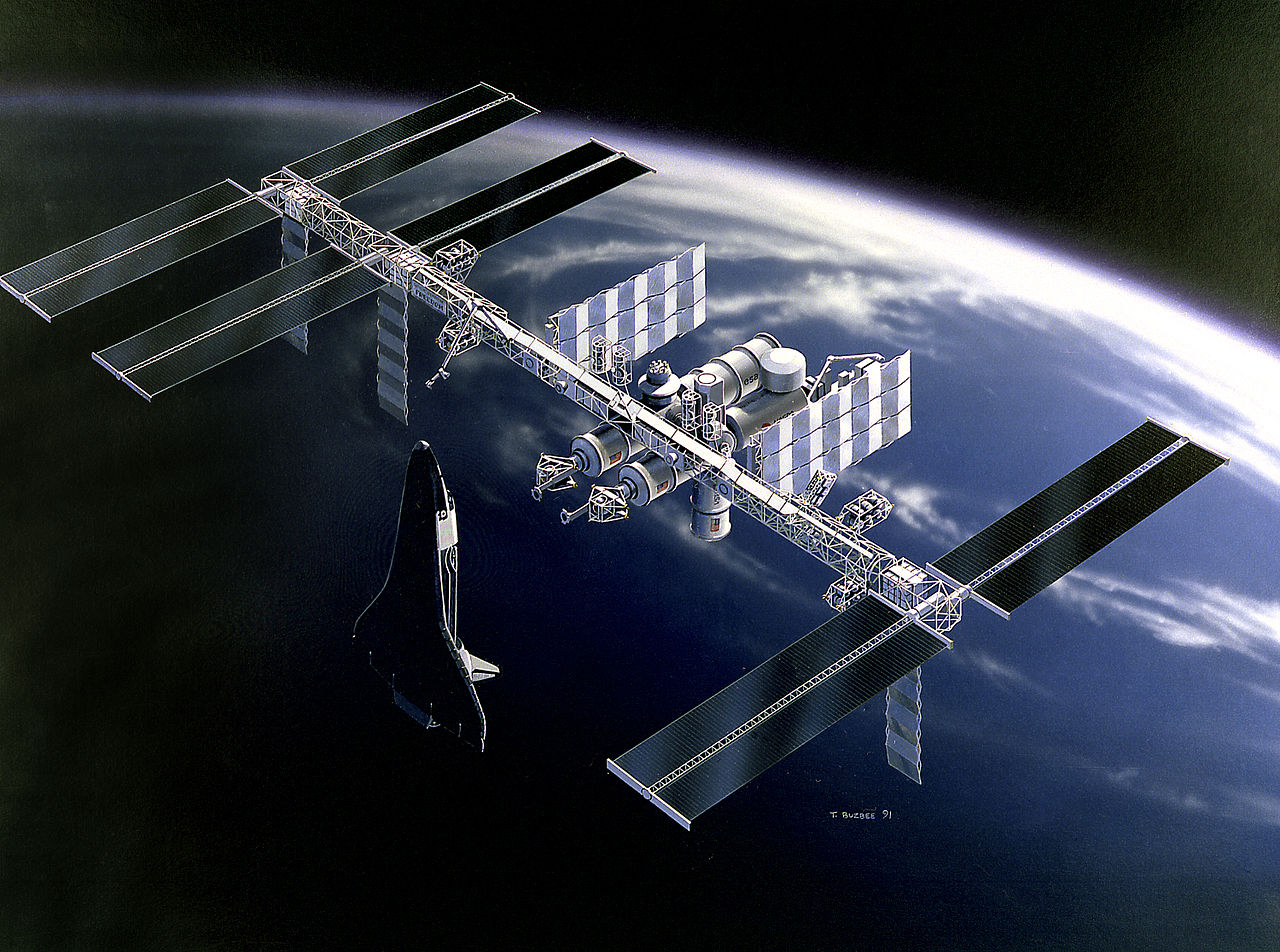
As part of our DSE Division, if we wish to occupy celestial bodies beyond the asteroid belt and star systems beyond ours, and eventually deep parts of the cosmos, we much have the technical and mental capability to first occupy the orbit of our own planet. The primary orbital space station for humanity right now is widely considered to be the International Space Station, or also called, as you probably know, the ISS. Though this huge space station (the size of a US football field) has been operational for decades and has hosted countless astronauts, its technology and appearance is embarrassingly old. Just look at some pictures below.
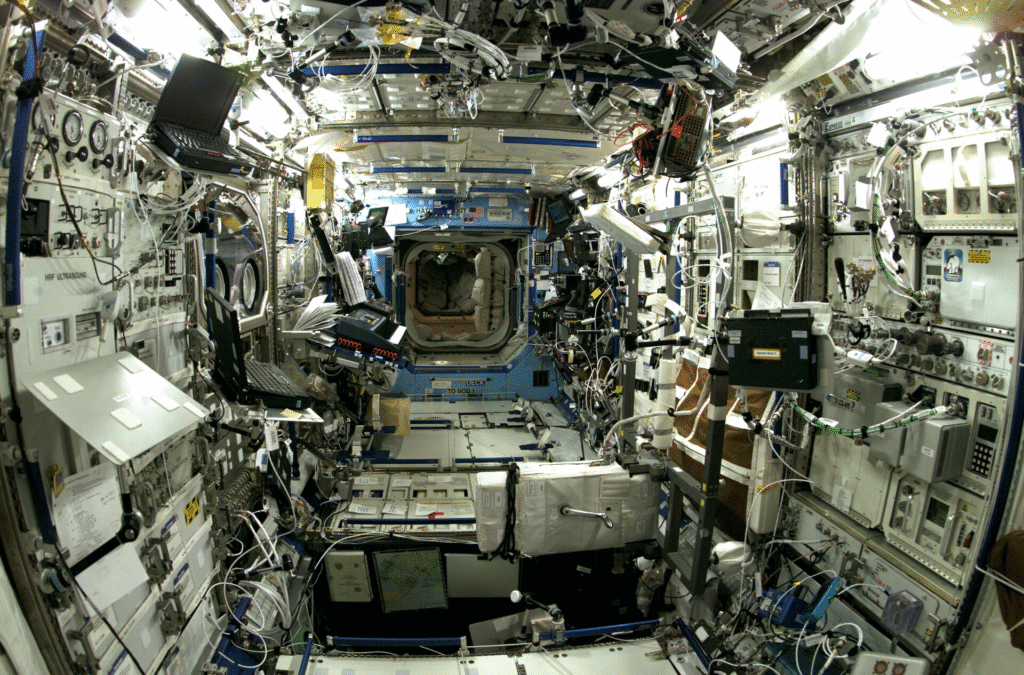
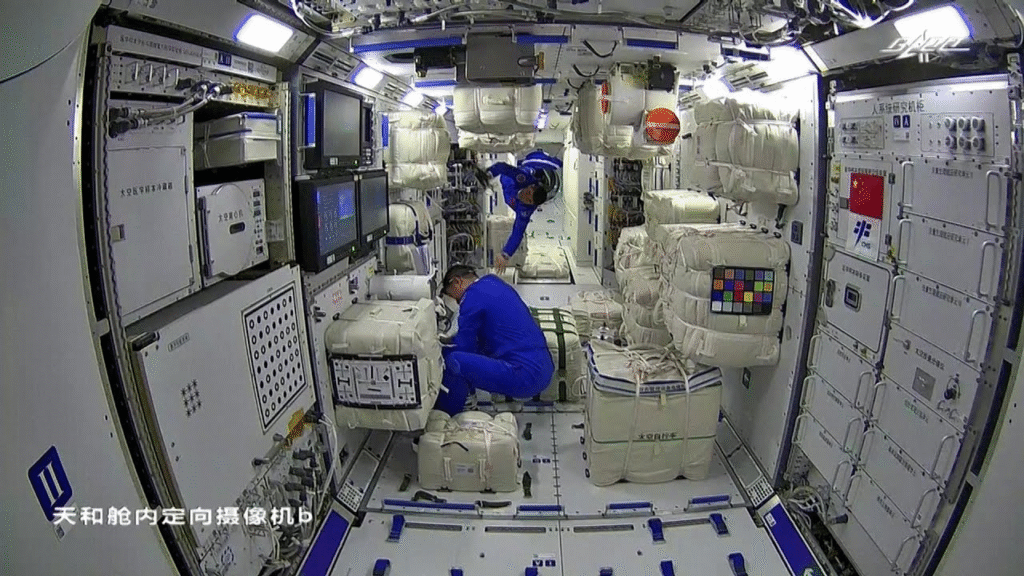
Wires everywhere, computers on the walls, no further explanation needed. This is not modern. Now we can have a look at China's Tiangong Space Station. It certainly is not as modern as it could be, but it is a dramatic improvement from the space station, at least in terms of appearance.
Atmos aims to build, initially, dozens of space stations to be placed in the orbits of Earth, as well as Earth's Moon. These space stations would be substantially more modern in terms of appearance and technical functionality as well as engineering, and would be much more efficient in virtually every aspect. It's high time that humanity occupies the sphere of influence of its own planet.
Apollo 11 landed on the Moon in July of the year 1969. Do you know how far away that is? At present, the year is 2023. NASA landed people on the Moon nearly 54 years ago. If you asked someone back then what they thought space stations would look like today, they would probably imagine something far more advanced than what we have. It's time for us to bridge that gap and build the futuristic orbital infrastructure that humanity deserves.